Why your chicken goes grey instead of golden
Browning is a chemical reaction with conditions. Miss any one of them and you get steamed, pale chicken — here are all four.
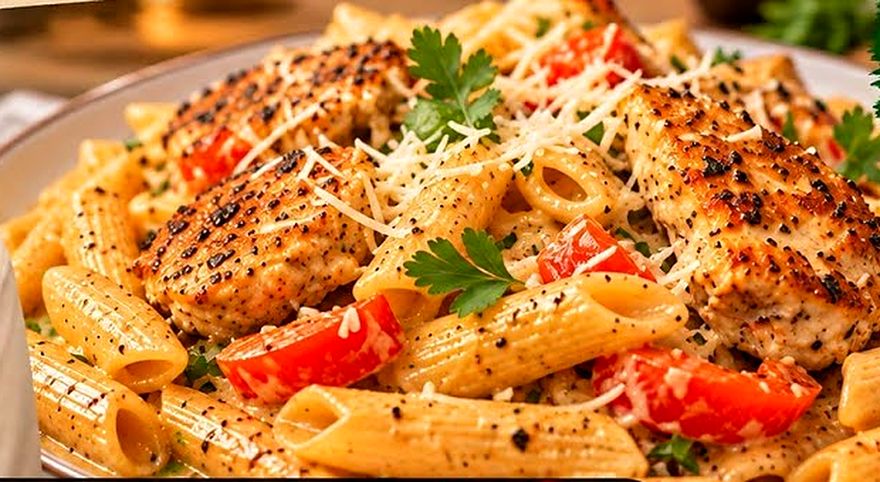
Golden-brown chicken is not a cosmetic detail. That crust is where a large share of the flavour in the finished dish comes from, and grey chicken in a cream sauce tastes noticeably flatter than browned chicken in the same sauce.
The browning is the Maillard reaction — amino acids and sugars rearranging under heat into hundreds of new aromatic compounds. It is not caramelisation, which is sugar alone. Maillard needs four conditions at once, and if any single one is missing you get pale, steamed meat instead.
1. A dry surface
This is the one people skip, and it is the one that matters most.
Maillard runs properly from about 140 °C upward. Water boils at 100 °C. As long as there is moisture sitting on the surface of the chicken, that surface is physically stuck at boiling point, because all the incoming energy goes into evaporating water rather than raising the temperature. The meat steams. It cannot brown until it is dry.
So pat the chicken properly dry with paper towel before it goes anywhere near the pan. If you have time, leave it uncovered in the fridge for thirty minutes first — the surface dries further and browns noticeably faster.
This is also why wet marinades work against you here. If you are marinating, lift the chicken out and blot it before searing.
2. A hot enough pan
Preheat the pan before the oil, and the oil before the chicken. The pan should be hot enough that the oil shimmers and moves easily when you tilt it, but not smoking.
A cold start is a guaranteed grey result: the chicken releases its own moisture into a pan that cannot evaporate it fast enough, and the meat sits poaching in its own juices.
3. Enough space
Every piece of chicken you add cools the pan and releases steam. Crowd the pan and the temperature crashes below the browning threshold, the steam has nowhere to escape, and everything goes pale and rubbery.
Cook in batches. Leave space between the pieces — if they are touching, the pan is too full. Two batches of properly browned chicken will always beat one batch of grey chicken, and it costs you five extra minutes.
4. Leave it alone
This is the hardest part. Once the chicken is down, do not move it, poke it or lift it to check. Browning takes uninterrupted contact with hot metal, and every time you move a piece you interrupt the reaction and start again.
Give it three minutes untouched. There is a useful signal here: properly seared meat releases itself. While the crust is still forming, the proteins are gripping the pan. Once the crust has set, it lets go. If a piece sticks when you try to turn it, it is not ready — give it another thirty seconds and try again.
What about the brown bits left in the pan?
Those stuck-on brown patches are called fond, and they are concentrated Maillard flavour. Do not wash them away.
Once the chicken is out, add your onions and peppers to the same pan; the moisture they release begins lifting the fond. Then when the liquid goes in — broth, cream, wine, even water — scrape the base firmly with a wooden spoon. Everything stuck to the pan dissolves into the sauce. This step is called deglazing, and it is the difference between a sauce that tastes like cream and a sauce that tastes like the dish.
Does searing seal in the juices?
No. This is one of the most repeated pieces of kitchen folklore and it is simply not true — seared meat loses moisture at much the same rate as unseared meat. Searing is worth doing for flavour and texture, not for moisture.
What actually keeps chicken juicy is not overcooking it. Chicken breast is done at 74 °C internal; every degree past that squeezes out more water. If you take one thing from this article, a cheap instant-read thermometer will improve your chicken more than any technique.
The order that works
- Pat the chicken completely dry and season it.
- Heat the pan, then the oil, until shimmering.
- Lay the pieces down with space between them.
- Do not touch for three minutes. Turn when they release.
- Remove and rest while you cook the vegetables in the same pan.
- Deglaze, scraping up every brown bit, and build the sauce on top.
Watching beats reading for this one — subscribe on YouTube for a new recipe every few days.
 Make itCreamy Cajun Chicken PastaFull recipe with measurements →
Common questions
Why does my chicken turn grey instead of browning?
The surface is too wet, the pan is not hot enough, or the pan is overcrowded. Wet chicken steams at 100 °C and browning needs about 140 °C, so the meat cannot brown until the surface moisture has gone. Pat it dry, preheat properly and cook in batches.
How long should I sear chicken without moving it?
About three minutes. Properly seared meat releases itself from the pan, so if a piece sticks when you try to lift it, the crust has not finished forming. Give it another thirty seconds and try again.
Does searing meat seal in the juices?
No, that is a myth. Seared meat loses moisture at a similar rate to unseared meat. Searing is worth doing for flavour and texture. Juiciness comes from not overcooking, and chicken breast is done at 74 °C internal.
Should I wash out the brown bits stuck to the pan?
Never. Those bits are called fond and they are concentrated flavour. Add liquid to the hot pan and scrape them up with a wooden spoon so they dissolve into the sauce and give it most of its depth.