Fudgy vs. cakey brownies: the three numbers that decide it
It isn't luck and it isn't your oven. Fudgy brownies come down to fat, flour and air — and you control all three.
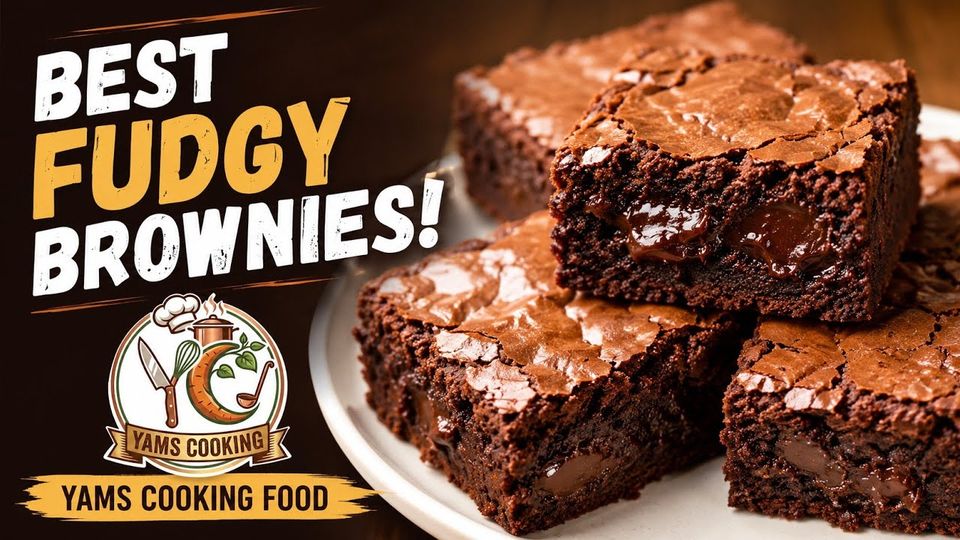
Every brownie sits somewhere on a line between fudge and cake. Where yours lands is not decided by the oven or by luck. It is decided before the tin goes in, by three things you can measure and repeat.
If your brownies keep coming out dry, crumbly or oddly bready when you wanted dense and glossy, one of these three numbers is wrong. Here is what each one does.
1. The fat-to-flour ratio
This is the single biggest lever, and most home bakers never touch it.
Flour builds structure. When flour meets liquid, its two proteins link up into gluten, and gluten is what makes a crumb hold its shape and spring back. Fat does the opposite: it coats the flour particles and physically gets in the way of those protein links forming. More fat relative to flour means less structure, which means a denser, softer, fudgier result.
A cakey brownie recipe typically runs close to equal weights of fat and flour. A properly fudgy one runs roughly two parts fat to one part flour by weight. That is the whole trick. You are not adding a magic ingredient; you are shifting the balance so that structure loses.
This is also why weighing matters more in brownies than in almost anything else. A cup of flour scooped straight from the bag can weigh 140 g; the same cup spooned in gently and levelled can weigh 120 g. That 20 g swing is enough to move a brownie from fudgy to cakey without you changing a single thing in the method.
2. How much air you beat in
Air is leavening. Every bubble you whip into the eggs and sugar expands in the oven and lifts the crumb — which is exactly what you want in a sponge and exactly what you do not want in a brownie.
Here is the tension. You do want to beat the eggs and sugar for a few minutes, because that is what dissolves the sugar and floats it to the surface, where it forms the thin, shiny, crackly top everyone is chasing. But beat too long and you have made a chocolate sponge.
The working compromise is to whisk eggs and sugar until pale and slightly thickened, around three minutes, then stop. After the flour goes in, switch to a spatula and fold only until the last streak disappears. Every extra stir from that point develops gluten and knocks the air out unevenly, which gives you tough edges and a sunken middle.
3. When you take them out
Brownies carry on cooking in the tin. The residual heat in a hot metal pan is enough to move the centre several degrees after it leaves the oven, so a brownie baked until the middle looks done will be overbaked by the time it has cooled.
Pull them when a skewer into the centre comes out with moist crumbs clinging to it — not wet batter, not clean. A clean skewer means you have gone too far. The edges should be set and pulling very slightly away from the tin while the centre still has a gentle wobble.
Then leave them alone. Brownies need to cool fully in the tin before cutting, ideally a couple of hours. Warm brownies have not finished setting; cutting into them early is why slices fall apart and why the middle can look raw when it is actually fine.
Why the chocolate you choose changes the texture
Cocoa powder and melted chocolate are not interchangeable, and swapping one for the other is a quiet way to wreck the ratio you just balanced.
Cocoa powder is mostly dry solids with very little fat, so it behaves partly like flour — it absorbs moisture and adds structure. Melted dark chocolate brings cocoa butter with it, which counts toward your fat. A recipe built around melted chocolate will be fudgier than the same recipe built around an equivalent amount of cocoa, because you have quietly raised the fat side of the ratio.
Using both, as our recipe does, gives you deep flavour from the cocoa and a dense, glossy set from the cocoa butter.
Quick reference
- Want fudgier? More fat, less flour, fold less, pull it out earlier.
- Want cakier? Less fat, more flour, whip longer, add a little baking powder.
- Want a shinier top? Dissolve the sugar properly — whisk it with the eggs until the mixture ribbons off the whisk.
- Want cleaner slices? Cool completely, then cut with a long knife wiped clean between cuts.
The mistakes that cause most failures
Measuring flour by volume. Covered above, and it is the most common single cause of dry brownies.
Overbaking by five minutes. Brownies have a narrow window. Check them at the earliest time the recipe gives, not the latest.
Cutting them warm. Patience is an ingredient here.
Using a glass dish without adjusting. Glass heats more slowly than metal and then holds that heat, so the edges keep cooking hard. If glass is all you have, drop the oven by around 10 °C and start checking early.
Watching beats reading for this one — subscribe on YouTube for a new recipe every few days.
Make itBest Fudgy BrowniesFull recipe with measurements →
Common questions
Why are my brownies cakey when I wanted fudgy?
Almost always too much flour relative to fat, or too much air beaten in after the flour was added. Weigh your flour rather than scooping it, aim for roughly twice as much fat as flour by weight, and fold only until the last streak of flour disappears.
Should I use melted butter or oil for fudgy brownies?
Both work, because both are pure fat. Butter brings more flavour and a slightly firmer set once cool; oil stays softer at fridge temperature. Butter is the better choice when the brownie is the whole point.
Why don't my brownies have the shiny crinkly top?
That top is a thin layer of dissolved sugar that floats up and sets. You get it by whisking the eggs and sugar together until the mixture is pale and ribbons off the whisk, about three minutes, before anything else goes in.
How do I know when brownies are done?
A skewer into the centre should come out with moist crumbs stuck to it, not clean and not coated in wet batter. The edges should look set and the middle should still wobble slightly. They finish cooking in the tin as they cool.