Why is my chicken grey? Two different problems, one colour
Grey on the outside and grey on the inside have nothing to do with each other. One is a cooking mistake, one is normal, and only one of them is ever a reason to throw the chicken away.
You cook chicken, it comes out grey instead of golden, and the obvious worry arrives: is this safe?
Almost always, yes. But "grey chicken" covers two completely separate problems that happen to look similar, and the fix for one has nothing to do with the other. Start by working out which you have.
Grey on the outside, or grey inside?
- Pale, grey, slightly wet-looking on the surface, with no browning anywhere — a cooking problem. The chicken steamed instead of searing.
- Browned outside, grey or greyish-brown in the meat — usually normal, and usually nothing to do with your cooking.
- Grey before it went anywhere near the pan — a different question entirely. See below.
Grey outside: it steamed instead of browning
Browning is the Maillard reaction, and it needs a dry surface above about 140°C. Water boils at 100°C, so as long as there is liquid sitting on the chicken, the surface cannot get hot enough to brown. It poaches in its own moisture and comes out pale grey.
Three things cause it, and they compound:
- A crowded pan. Every piece releases moisture. Too many pieces and the pan floods, the temperature crashes, and nothing browns.
- Wet chicken. Straight from the packet or from a marinade, the surface is covered in liquid that has to boil off before browning can begin.
- A pan that was not hot enough. Adding chicken drops the pan temperature sharply. If it started merely warm, it never recovers.
The fix is unglamorous: pat the chicken dry with kitchen paper, get the pan properly hot before anything goes in, and cook in batches with space between the pieces. Grey chicken is almost always too much chicken in too small a pan.
Grey inside: myoglobin and bone marrow
Myoglobin is the protein that stores oxygen in muscle. It is what makes meat red, and there is far more of it in legs and thighs than in breast. Heat denatures it, and it turns brown or greyish-brown. Dark meat that looks grey-brown through the middle is usually just dark meat, fully cooked.
The other cause is bone marrow. Supermarket chickens are young, and young bones are porous. During cooking, dark pigment from the marrow seeps into the meat around the bone and stains it grey or nearly black. It looks alarming next to the bone and is entirely harmless.
Muscle pH also plays a part: in lower-pH meat the myoglobin denatures at a lower temperature, so colour changes earlier than you would expect. Which leads to the important bit.
Colour is not a doneness test
Not grey, not white, not pink, and not "the juices run clear" either. All of them are unreliable, because the pigment chemistry varies with pH, with the bird's age, and with how the meat was stored.
The only test that works is temperature. 74°C (165°F) at the thickest point is the food safety threshold, and it is safe at that temperature regardless of what colour the meat is. Thighs and drumsticks are better taken further, around 80°C, where the connective tissue softens and the texture improves.
A cheap probe thermometer removes the entire question.
When grey actually is a warning
One case matters: chicken that was already grey raw. Fresh raw chicken is pink. Grey, dull or greenish raw chicken is a spoilage signal, and no amount of cooking makes spoiled meat safe.
Check the other two senses as well. Slimy or sticky to the touch, or any sour or ammonia smell, and it goes in the bin. Those signs together are far more reliable than colour alone.
The short version
- Pale and grey all over, no browning — pan too crowded or not hot enough, chicken too wet.
- Grey-brown through the meat — myoglobin in dark meat. Normal.
- Grey or near-black next to the bone — marrow pigment. Harmless.
- Grey when raw, or slimy, or sour-smelling — spoiled. Throw it out.
- Any doubt about doneness — 74°C on a thermometer, not a colour.
If browning is the part giving you trouble, the mechanics of searing are worth reading next — the same dry-surface rule governs every pan of chicken you will ever cook.
Watching beats reading for this one — subscribe on YouTube for a new recipe every few days.
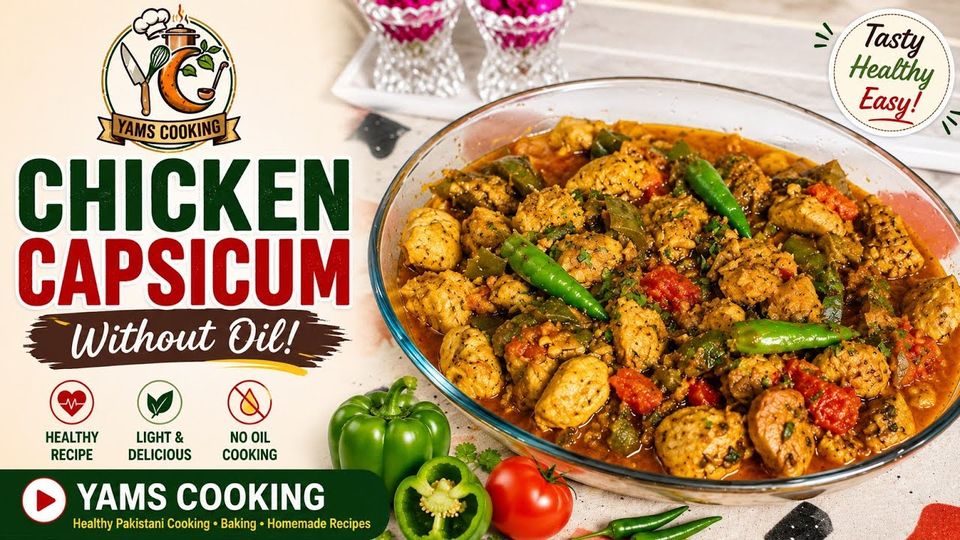
Make itChicken Capsicum Without OilFull recipe with measurements →
Common questions
Is grey chicken safe to eat?
If it was pink and fresh before cooking and reached 74C in the thickest part, yes. Grey cooked meat is usually denatured myoglobin, which is more concentrated in thighs and legs, or pigment that has seeped out of porous young bones. Grey raw chicken is a different matter and should be thrown away.
Why is my chicken grey instead of golden brown?
It steamed rather than seared. Browning needs a dry surface above about 140C, and water boils off at 100C, so any liquid on the chicken keeps the surface too cool to brown. Usually the pan was overcrowded, the chicken went in wet, or the pan was not hot enough to start.
Why is the meat near the bone grey or black?
Marrow pigment. Supermarket chickens are young and their bones are still porous, so during cooking the dark pigment inside seeps into the surrounding meat. It looks worse than it is and has no effect on safety or taste.
Does grey chicken mean it is overcooked?
Not by itself. Grey through the meat is usually myoglobin in dark meat rather than a sign of overcooking. Overcooked chicken announces itself by texture, not colour: dry, tight and stringy. Use a thermometer rather than the colour to judge it.
Can I still eat chicken that was grey before cooking?
No. Fresh raw chicken is pink. Grey, dull or greenish raw meat indicates spoilage, and cooking does not make spoiled meat safe. Check for a slimy surface and a sour or ammonia smell as well, and discard it if any of those are present.