Chicken Capsicum Without Oil
Chicken Shimla Mirch · high-protein
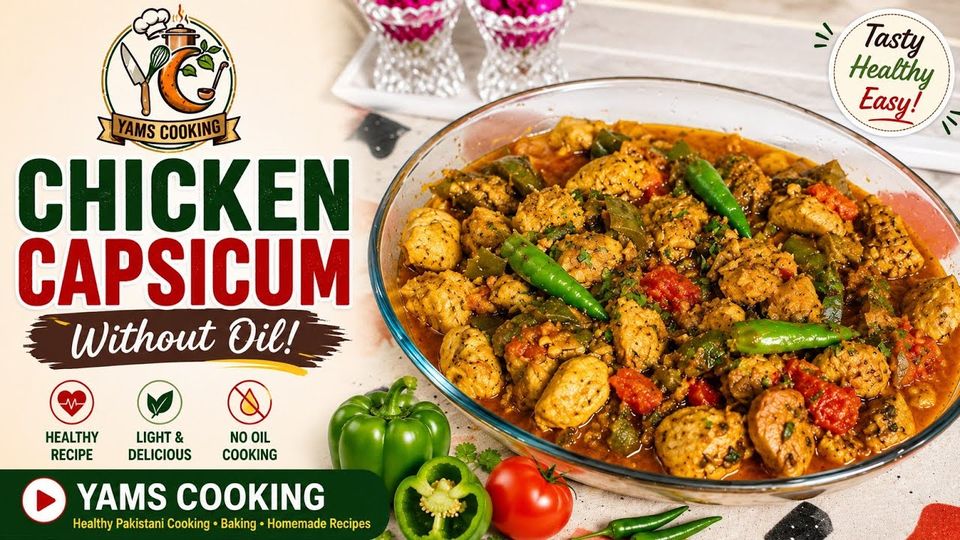
A healthy, flavourful Chicken Capsicum (Chicken Shimla Mirch) — tender boneless chicken, fresh capsicum, tomatoes, yogurt and aromatic spices in a creamy homemade curry. No cooking oil; the onions are fried in a little desi ghee and the dish is finished with 1 tbsp butter, so it is not completely fat-free.
Ingredients
- 1 kg boneless chicken cubes
- 2 tbsp desi ghee
- 3 green chillies
- 3 whole pieces of pure turmeric
- 2 onions
- 2 tomatoes
- 1 tbsp ketchup
- 1 large capsicum / Shimla Mirch
- 1 tbsp ginger-garlic paste
- 1 tbsp butter (to finish)
- Dry spices: 1 tsp coriander powder · 1 tsp cumin powder · 1 tsp red chilli powder · 1 tsp garam masala · ½ tsp turmeric powder
- ½ cup yogurt · ½ cup water
- Lemon juice, fresh coriander and green chillies, to finish
Nutrition is an estimate per serving.
Method
- Fry the onions in desi ghee until the colour changes — do not brown them.
- Add the chicken cubes and cook until the chicken releases its moisture.
- Add ginger-garlic paste, whole turmeric and green chillies; continue cooking until the tomatoes turn nicely red and cooked.
- Add the dry spices and cook together to develop the flavour.
- Add ketchup, yogurt and ½ cup water; mix to a creamy consistency.
- Cover and cook on low heat (dum) 10–15 minutes until the chicken is soft and tender. Add the capsicum so it stays a little crisp.
- Final step: add 1 tbsp butter — this gives the rich finish. Add lemon juice, fresh coriander and green chillies.
Watch it made
Notes on this recipe
Onions pale, not brown
The instruction to cook the onions until the colour just changes, and no further, is deliberate. Browned onions bring a deep, sweet, almost caramelised flavour that belongs in a korma and would bully everything else here. Stopping while they are still pale keeps the dish tasting of chicken, tomato and capsicum rather than of onion. It is the difference between this and every other chicken curry.
Letting the chicken release its water
Adding the chicken early and cooking it until it gives up its moisture looks like a step you could rush, and rushing it costs you. That released liquid is where the spices dissolve and where the sauce comes from. Cook it off properly and the masala fries in what is left rather than boiling in it, which is what concentrates the flavour. Crowd the pan or hurry this stage and the whole dish stays watery and pale.
Yogurt will split if you let it
Half a cup of yogurt going into a hot pan is the one place this recipe can go visibly wrong. Yogurt proteins curdle above roughly 85 °C, which leaves a grainy sauce with the fat separating out. Take the pan off the heat for a moment before it goes in, stir it through, then return it to a low flame. Whisking the yogurt smooth first helps as well. It will still taste right if it splits, but it will not look right.
Capsicum goes in late
The capsicum is added near the end of the covered cooking, not at the start, so it keeps its bite and its colour. Give it the full fifteen minutes and it collapses into the sauce and turns dull green. Seven or eight minutes is enough to take the raw edge off while leaving it firm. The butter at the very end is the same principle: added off the heat or at the last moment, it enriches the sauce rather than frying in it.
Serving and keeping
Rice, roti or flatbread all work; the sauce is thick enough to sit on top rather than run. Lemon juice at the end is not optional in practice — the acid lifts a dish that is otherwise quite rich, and it is the thing people notice is missing when it is left out. Keeps three days covered in the fridge and reheats better than most chicken dishes, because the yogurt sauce protects the meat from drying. If your chicken comes out looking grey rather than browned, that is usually the pan rather than the chicken.