No-bake cheesecake not setting? Work through these in order
Hours in the fridge and it is still soup. There are seven reasons that happens, and most of them can still be rescued.
A baked cheesecake sets because eggs coagulate. A no-bake one has no eggs and no oven, so it has to get its structure somewhere else — and when it stays liquid, it is because that structure never formed.
Here is what to check, roughly in order of how often each one is the culprit.
1. It simply has not had long enough
The most common answer is the least satisfying. Most no-bake cheesecakes need at least 6 hours, and overnight is better. Four hours is usually not enough, especially for a deep tin.
If it has been fewer than 6 hours, put it back and leave it alone. Opening the fridge repeatedly and prodding the middle does not help.
2. The cream was not whipped enough
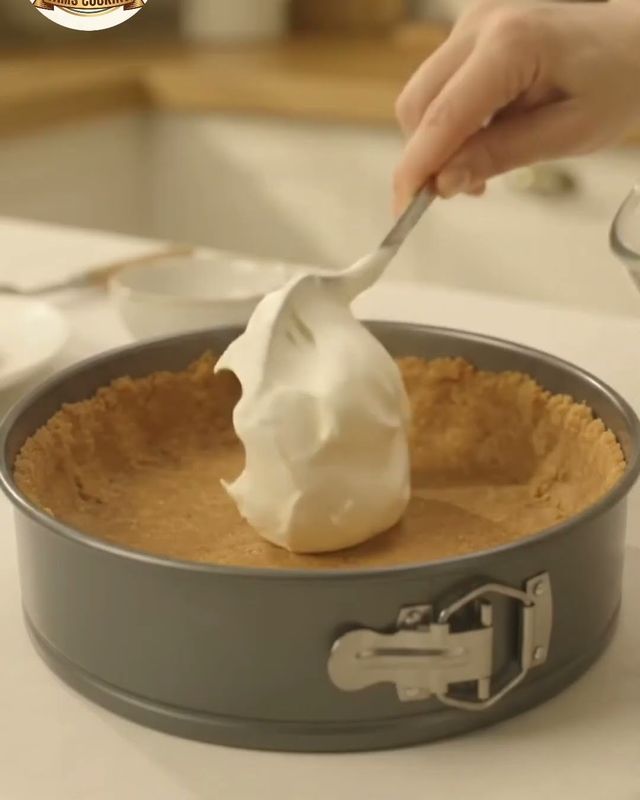
In a cream-based recipe with no gelatin, the whipped cream is the structure. It has to reach stiff peaks — the peak stands up on the whisk without flopping over.
Soft peaks will not hold a cheesecake up no matter how long you chill it. Whip the cream separately to stiff peaks first, then fold it into the cream cheese mixture, rather than whipping everything together in one bowl.
3. You used the wrong cream cheese
This catches a lot of people. Spreadable cream cheese from a tub is not the same as block cream cheese. Tub varieties contain more water and added gums to keep them soft and scoopable — exactly the properties you do not want.
Low-fat and "light" versions are worse again: less fat, more water. Use full-fat block cream cheese, and let it come to room temperature so it blends smoothly without needing extra beating.
4. You over-mixed after adding the cream
Counterintuitive, but real. Once whipped cream is folded in, every extra stir knocks out the air you just spent five minutes building, and over-beaten cream cheese can turn loose and soupy.
Fold gently with a spatula, and stop the moment it looks uniform.
5. The setting agent never activated
If the recipe uses gelatin or agar-agar, this is where it went wrong — and they fail in opposite ways.
Gelatin must be bloomed in cold liquid for about 5 minutes, then warmed gently until dissolved. If you boiled it, you destroyed its setting power; gelatin is a protein and high heat denatures it.
Agar-agar is the reverse: it must reach a full rolling boil for a minute or two or it will not activate at all. Merely warming it does nothing.
They are also not interchangeable by weight — agar sets roughly three times more strongly. There is a fuller comparison in our piece on agar-agar versus gelatin.
6. There is too much liquid
Lemon juice, fruit purée, coffee, melted chocolate that seized — anything watery added beyond what the recipe calls for dilutes the structure. Acid also weakens agar specifically.
If you want a stronger lemon flavour, use zest rather than more juice. Zest is all flavour and no water.
7. The fridge is too warm
A fridge should run at or below 4 °C. Many run warmer, particularly when full or when the door is opened often. A cheap fridge thermometer settles the question in a day.
Can you rescue it?
Usually, yes.
The easy fix: move it to the freezer for 2–3 hours and serve it semi-frozen. Texture leans toward a frozen cheesecake, which is genuinely pleasant, and nobody need know.
The real fix: scrape the filling back into a bowl, leaving the crust in the tin. Bloom gelatin in a few tablespoons of cold water, warm it gently until clear, let it cool to barely warm, then whisk it through the filling. Pour back over the crust and chill overnight. Do not add hot gelatin to a cold mixture — it seizes into threads instead of dispersing.
When to give up: if the filling has split and looks curdled or grainy, the emulsion has broken and no amount of setting agent will bring it back. Start again.
Preventing it next time
Test a spoonful before committing. Put a teaspoon of the finished filling on a cold saucer and give it 10 minutes in the fridge. If that firms up, the whole tin will. If it does not, you still have time to fix it — which you will not once six hours have passed.
Watching beats reading for this one — subscribe on YouTube for a new recipe every few days.
Make itNo-Bake Cheesecake Without OvenFull recipe with measurements →
Common questions
How long does a no-bake cheesecake take to set?
At least 6 hours, and overnight is better. A deep tin needs longer than a shallow one. If it has been fewer than 6 hours, the most likely answer is simply that it needs more time.
Why is my no-bake cheesecake not setting in the fridge?
The usual causes are cream that was not whipped to stiff peaks, spreadable tub cream cheese instead of full-fat block, over-mixing after the cream went in, or a setting agent that was not activated properly. Check the fridge is at or below 4 °C too.
Can I use spreadable cream cheese for no-bake cheesecake?
It is best avoided. Tub cream cheese contains more water and added gums to keep it soft, which is the opposite of what you need. Use full-fat block cream cheese at room temperature.
How do I fix a no-bake cheesecake that did not set?
Either freeze it for 2–3 hours and serve it semi-frozen, or scrape the filling off the crust, whisk in properly bloomed and gently melted gelatin once it has cooled to barely warm, then chill overnight. If the filling looks curdled, start again.