Why are my cookies hard the next day? Storing them properly
They were perfect out of the oven and bricks by morning. That's moisture leaving — and two of the fixes take ten seconds.
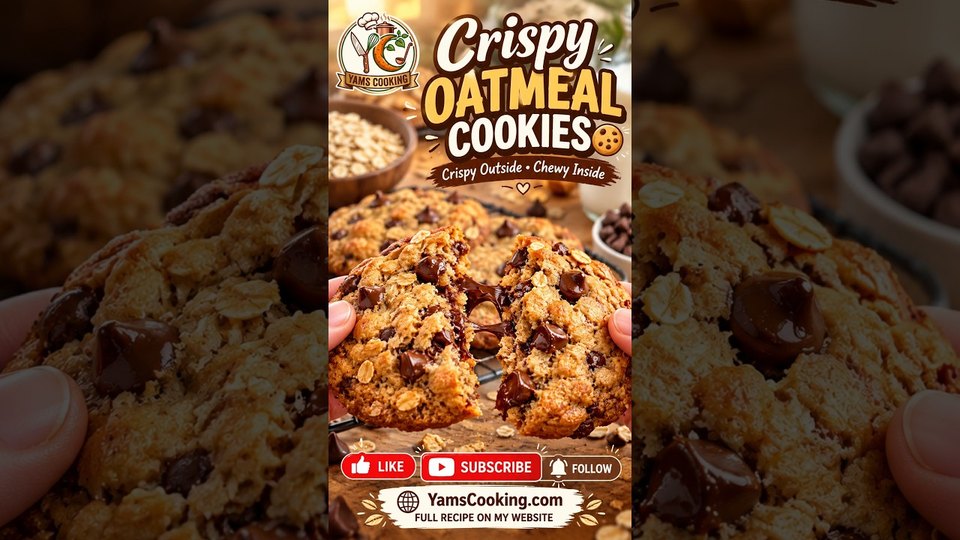
You bake a batch, they are soft and chewy, and by the next afternoon they could break a tooth. Nothing went wrong in the oven — what you are seeing happens entirely during cooling and storage.
Two things are happening, not one
Moisture leaves. A warm cookie is full of steam. Left in open air, that water evaporates into the room, and the cookie dries from the outside in.
The starch recrystallises. This is the less obvious half. During baking, starch granules absorb water and swell — the process that makes baked goods soft. As they cool and sit, those starch molecules slowly reorganise into a more rigid structure and squeeze that water back out. Bakers call it retrogradation, and it is the same reason bread goes stale.
So a hard cookie is not simply a dry one. Some of its water is still there, just locked into a structure that feels firm rather than soft.
The fixes, in order of how much they help
1. An airtight container, once they are completely cool
Both halves of that sentence matter.
Airtight stops moisture escaping into the room. A plate under foil is not airtight; a biscuit tin with a loose lid is not airtight. Use a container that properly seals.
Completely cool matters just as much. Seal cookies while they are still warm and the steam has nowhere to go — it condenses on the lid, drips back down, and you get soft, soggy bottoms and sometimes mould within days. Wait until they are at room temperature all the way through, which takes longer than it feels like.
2. The slice of bread trick
Put a slice of plain white bread in the container with soft cookies. The bread holds far more free moisture than the cookies do, so moisture migrates from the bread into the cookies until they equalise. The bread goes hard and stale; the cookies stay soft.
It genuinely works, it costs nothing, and it is the single most effective thing you can do. Swap the slice when it dries out, every couple of days.
An apple wedge does the same job, but it adds a faint fruit note and spoils faster. Bread is the better choice.
3. Do not store crisp and soft cookies together
This is the mistake people make without realising. Moisture always travels from wherever there is more to wherever there is less. Put crisp shortbread in with soft chocolate chip cookies and you end up with the worst of both: the crisp ones go limp and the soft ones go dry.
Two containers. Always.
4. Keep them out of the fridge
The fridge is the fastest way to stale a cookie. Starch retrogradation runs fastest at fridge temperatures — faster than at room temperature and far faster than frozen. A cookie that would stay good for four days on the counter can be noticeably hard after one night in the fridge.
Room temperature, in the dark, away from the oven and off the windowsill.
Crisp cookies are the opposite problem
If you want crisp — shortbread, biscotti, slice-and-bake cookies like our coffee chocolate ones — your enemy is humidity, not dryness.
Store them airtight with nothing moist in the container. No bread slice. If they have gone soft and bendy, five minutes in a 150 °C oven drives the moisture back off and they crisp up again as they cool.
Freezing is better than any container
Retrogradation effectively stops below freezing, so a frozen cookie is genuinely paused rather than slowly declining.
- Baked cookies: cool completely, freeze flat on a tray, then bag them. Up to 3 months. Thaw at room temperature for 20 minutes, or 10 seconds in the microwave.
- Raw dough: better still. Scoop into balls, freeze on a tray, then bag. Bake from frozen with 2–3 extra minutes. You get a genuinely fresh cookie whenever you want one, which no storage method can match.
Reviving cookies that have already gone hard
Microwave: 8–10 seconds with a damp paper towel over them. The steam softens them. Eat immediately — they go harder than before once they cool again.
Oven: 2–3 minutes at 150 °C restores some of the fresh-baked texture, and works better for crisp cookies than soft ones.
The container trick: seal them with a slice of bread overnight. Slower, but it genuinely softens them rather than just warming them.
Was it the recipe?
If cookies are hard within hours rather than the next day, storage is not the problem. Look at the bake instead: overbaking by even three minutes drives out far more moisture than any container can hold on to. Pull cookies when the edges are set and the centres still look slightly underdone — they finish setting on the hot tray.
Recipes high in brown sugar also stay softer for longer, because molasses is hygroscopic and holds on to water. Swapping brown sugar for white gives a crisper cookie that hardens faster.
Watching beats reading for this one — subscribe on YouTube for a new recipe every few days.
Make itCrispy Oatmeal Chocolate Chip CookiesFull recipe with measurements →
Common questions
Why are my cookies hard the next day?
Two things: moisture evaporates into the room, and the starch recrystallises as the cookies sit, a process called retrogradation that squeezes water back out. Storing them airtight once completely cool, with a slice of bread, prevents most of it.
How do I store cookies to keep them soft?
In a properly airtight container, only once they are completely cool, with a slice of plain white bread added. Moisture moves from the bread into the cookies and keeps them soft. Replace the slice every couple of days.
Can I store cookies in the fridge?
Avoid it. Starch recrystallises fastest at fridge temperatures, so cookies go hard quicker there than on the counter. Room temperature in an airtight container is better, and the freezer is better still for anything beyond a few days.
How do I soften cookies that have gone hard?
Microwave for 8–10 seconds under a damp paper towel and eat straight away, or seal them overnight in a container with a slice of bread for a slower but longer-lasting fix. For crisp cookies, 2–3 minutes at 150 °C restores the snap.